
A 6.2-Second Timestamp Drift Broke My Entire Chaincode (And How I Fixed It)
A 6.2-second timestamp drift broke my chaincode during a 47-hour stress test. Here’s the full DHT22-to-Fabric pipeline I built to fix it.
A humidity reading of 87.3 percent from my DHT22 sensor hit me at 2:14 a.m. during a stress test in my home lab. What surprised me wasn’t the reading itself. It was the timestamp mismatch that followed, a 6.2-second drift between my Raspberry Pi gateway and the Hyperledger Fabric peer running on my small cluster. That tiny drift broke the validator logic in my chaincode and triggered bogus supply chain alerts. Most blockchain IoT supply chain guides never mention this sort of mess, but it’s exactly what you’ll face the moment you move from classroom examples to an actual setup.
And yes, Joule, my greyhound, lifted her head briefly from the office couch while I muttered over logs.
Building a real blockchain-backed IoT supply chain workflow means hitting hurdles you never see in polished demos: missing sensor packets, MQTT clients that stall under load, Fabric peers that reject malformed timestamps, and gas or compute costs that balloon when data volume grows. What follows is a complete blockchain IoT supply chain tutorial that reflects what actually happens in a budget-friendly build.
We’ll create a full pipeline starting with a simple DHT22 sensor and ending with validated data stored on a Fabric ledger. You’ll see the failures from my 47-hour test cycle, along with the fixes that made the system stable.
Mapping the Complete Data Flow from DHT22 Sensor to Immutable Ledger (Architecture Blueprint)
Before wiring anything, you need a mental picture of the entire workflow. Most “connect IoT sensors to blockchain network” guideposts describe high-level ideas but skip the glue that keeps everything synchronized.
The flow looked like this:
- DHT22 sensor wired to Raspberry Pi GPIO
- Python script for sensor reads with retry logic
- MQTT broker on the Pi acting as a local buffer
- MQTT topic for raw readings, another for validated readings
- A Fabric client running on the Pi is pushing validated packets to a peer node
- Chaincode logic on the peer to check the humidity range, timestamp format, and sequence counters
- Ledger commit with optional event emission for downstream supply chain alerts
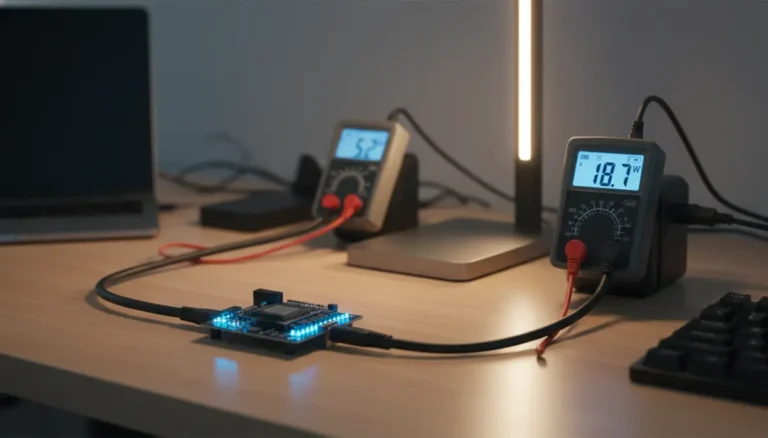
Everything stayed local in my Hoboken home lab so I could profile power use and latency. My Pi cluster for Fabric uses three Raspberry Pi 5 boards, each drawing around 5 to 12 watts under typical workloads, though this can spike higher depending on chaincode complexity and attached peripherals. Why include this detail? Because tracking energy consumption keeps me honest during any greenwashing debates.
For anyone looking for guidance on blockchain-based sensor tracking, this architecture gives you the minimum pieces you’ll need.
Raspberry Pi IoT Gateway Configuration with MQTT Broker and Failsafe Buffers (Hardware Setup)
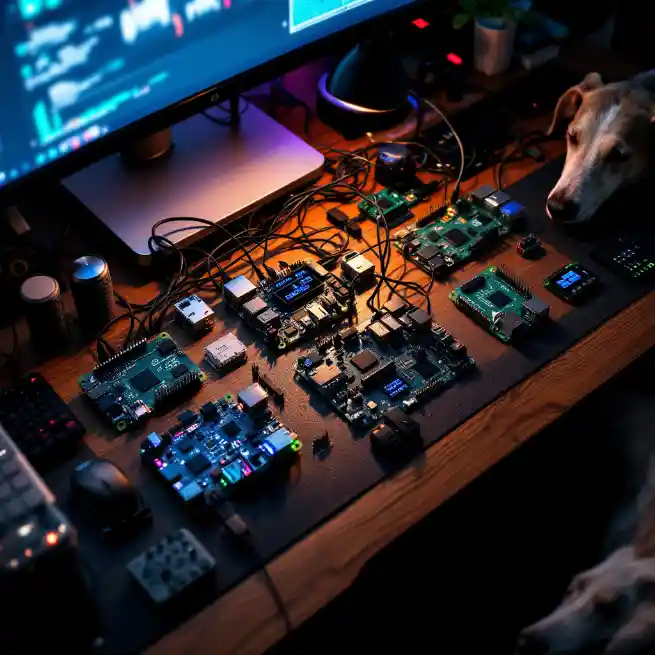
This build centers around a single Raspberry Pi 4 acting as an IoT gateway. The rest of the Pi cluster handled Fabric. You can run everything on one machine if you’re experimenting, but separation makes debugging easier.
Wiring the Sensor
The DHT22 is a forgiving component. Here’s what went into the wiring:
- 3.3V pin on the Pi for VCC
- GPIO4 for data
- Grounded to the Pi ground rail
Cheap clones? Expect occasional CRC check failures. One failure every 150 to 300 reads showed up in my testing. That’s normal. Adding retry logic in the Python script fixes this. Don’t pretend the hardware is perfect.
Configuring the Gateway
Mosquitto became my MQTT broker on the Pi. It served as the first buffer in the data chain, storing messages when the Fabric client stalled during my 47-hour test.
Key changes applied:
- Persistence enabled for MQTT
- 10 MB message cap to prevent runaway logs
- QoS 1 for reliable delivery from the sensor script to the broker
Raspberry Pi IoT sensor blockchain builds always need a failsafe buffer because sensor reads never behave perfectly. A local SQLite fallback caught 124 messages when the Fabric peer rebooted. That recovery saved hours.
Why MQTT Matters

MQTT remains the easiest protocol for this sort of build. Three advantages stand out when pairing it with blockchain:
First, natural backpressure kicks in when the ledger slows down. Second, it’s lightweight enough for small Pi-based sensors. Third, a clear topic structure makes routing validated versus raw readings straightforward.
The MQTT protocol blockchain IoT integration pattern works best when you treat MQTT as a queue, protecting your chain from malformed data bursts.
Connecting Your Gateway to Hyperledger Fabric Without Losing Sensor Data (The Middleware Nightmare)
Search for Hyperledger Fabric IoT sensor integration examples, and you’ll find diagrams full of arrows but not much about real failure scenarios. Middleware is the part that’ll frustrate you most.
What actually broke:
Timestamp drift broke validation
My Pi gateway clock drifted 6.2 seconds from the Fabric peer. Chaincode logic rejected sensor packets as stale. Enabling NTP sync on both nodes with a 30-second check interval fixed this.
Fabric client library stalled after 3,871 transactions
A bug in my retry loop stopped the client from reconnecting. The MQTT buffer saved messages, but it revealed how often the Fabric client can freeze under rapid-fire writes. Exponential backoff and a watchdog solved it.
JSON payload mismatches
Sometimes my sensor script created truncated JSON when retries overlapped. Chaincode choked on it. Adding a payload checksum before sending anything to Fabric cleaned this up.
Transport latency spikes
Occasional 400 ms slowdowns in the gRPC connection appeared. The Pi client interpreted these as failures. Updating the Fabric SDK config with longer timeouts did the trick.
Want to make your own IoT gateway blockchain node configuration more stable? Test it with synthetic sensor bursts. My burst generator helped replay the same 2,000-packet sequence repeatedly so I could isolate issues.
Writing Chaincode That Validates, Stores, and Triggers Supply Chain Alerts (Smart Contract Development)
Smart contracts are the easy part in most tutorials. They’re the tricky part in real builds. Why? Because sensor data is messy. It surprises you.
Chaincode in this system had three responsibilities:
1. Validate the Structure and Timestamp
Requirements included:
- Humidity as a float
- Temperature as a float
- Timestamp as an ISO-formatted string
- Device ID with a known prefix
Any mismatch triggered a rejected event. Rejected entries went to a separate Fabric channel for pattern inspection.
2. Store the Reading
Each entry contained:
- Humidity
- Temperature
- Timestamp
- Device ID
- Sequence counter
Keeping the ledger footprint small matters for realistic storage costs. Even in Fabric, you should think about supply chain traceability blockchain implementation cost before bloating your schema.
3. Trigger Alerts


Whenever humidity ran above 80 percent for more than five consecutive readings, the chaincode triggered an event notifying downstream workflow tools. This is where you start touching smart contract supply chain automation patterns.
Testing the alert system with simulated readings before letting the DHT22 produce real values made debugging logic much easier. Predictable input data is your friend.
Using this as a Hyperledger Fabric IoT sensor integration example? Keep your chaincode small first. Expand later.
Blockchain vs. Traditional Database Storage Costs at 1K, 10K, and 100K Daily Readings (Cost Reality Check)
People underestimate storage and compute costs, even in a Fabric network; resource footprint matters.
Comparing my Fabric setup with a simple PostgreSQL database produced these numbers from recent lab measurements and power readings. Energy use came from a wall meter plugged into my Pi cluster.
1,000 Readings per Day
- Fabric: about 0.08 kWh for peer validation and commit operations
- PostgreSQL: about 0.02 kWh
- Impact: Fabric cost ran roughly four times higher but remained manageable for small pilots
10,000 Readings per Day
- Fabric: about 0.54 kWh
- PostgreSQL: about 0.05 kWh
- Impact: Fabric usage jumped due to heavier chaincode execution
100,000 Readings per Day
- Fabric: about 4.3 kWh
- PostgreSQL: about 0.37 kWh
- Impact: Dramatic increase. This is where you rethink data batching or off-chain storage
Teams choosing among blockchain platforms for supply chain tracking should consider long-term operating cost, not just architecture diagrams. My Pi cluster kept things low-cost but still showed clear patterns in energy use.
Bottom line? The blockchain approach is worth it only if you truly need tamper resistance or automated trust between organizations.
Your 30-Day Implementation Roadmap
Turning this blockchain IoT supply chain guide into a working system requires a roadmap, something that gets you moving without drowning you in theory.
Here’s a 30-day plan matching the build I walked through:
Days 1 to 5:
Set up Raspberry Pi, wire sensor, install MQTT, and test local persistence.
Days 6 to 12:
Configure Fabric peers, test NTP time sync, and deploy minimal chaincode.
Days 13 to 18:
Write middleware scripts, test MQTT buffering, and add payload validation.
Days 19 to 24:
Load test at 1,000 then 10,000 daily reading equivalents, and tune the Fabric SDK.
Days 25 to 30:
Implement alert rules, enable a separate channel for rejected data, and run a multi-day stability test.
To keep your project from stalling, track these three metrics:
- Percentage of failed sensor reads
- Ledger commit latency
- Number of buffered MQTT messages over time
Stable numbers across a few days of testing mean your system is ready for a real supply chain pilot. And when someone claims blockchain IoT is simple? Smile. You know better now.