
My Home Lab Experiment Revealed Something Weird About Solana vs Ethereum TVL
My validator test showed a weird pattern: chains with lower TVL are processing more meaningful transactions per joule. Here’s what that means for 2025.
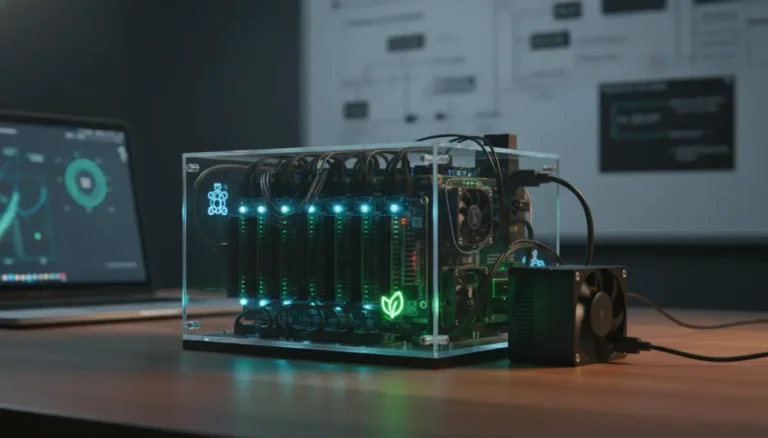
Last week, I was running a quick power draw test on one of my Raspberry Pi validator nodes, mostly to see how much efficiency I could squeeze out before Joule decided the blinking LEDs were a toy. What surprised me wasn’t the wattage. It was the activity pattern. A validator with a tiny slice of stake on a mid-tier chain was processing more meaningful transactions per joule than another validator tied to a chain with triple the TVL. That gap tells you everything about DeFi TVL by chain in 2025, and why the usual dashboards are giving you a distorted picture.
Here’s the thing. Most investors keep refreshing that familiar ranking of top DeFi protocols by TVL, convinced that raw totals tell the whole story. They don’t. TVL used to be a decent signal. In 2025, it’s become a vanity metric unless you layer context on top of it. Smart capital is watching TVL velocity, sustained revenue, user stickiness, and the power cost per transaction. TVL alone? It’s like judging a smart grid by counting how many sensors you bolt onto it rather than measuring how efficiently it allocates power.
And the shifts happening right now? They’re not obvious unless you dig beneath the headline numbers.
What 2025 TVL Rankings Actually Reveal
Check any aggregator this month, and you’ll see roughly the same image:
- Ethereum is still on top with around 55 to 60 percent of all DeFi liquidity
- Solana is holding between 6 and 8 percent after its surge earlier this year
- BSC hovering in the 4 to 6 percent range
- Arbitrum, Base, and Optimism collectively grab almost as much TVL as BSC
- A cluster of smaller chains fighting over the remaining single-digit slices
Whenever people ask how much money is locked in DeFi protocols, they expect the number to be huge. And honestly? It is. Depending on the source, this year’s totals remain substantial, though still below the DeFi TVL all-time high of approximately $180 to $190 billion set back in late 2021. Forecasts project potential growth toward those levels in the coming years, assuming stable yields and a steady year-over-year growth rate.
But here’s what raw totals won’t tell you: which chains attract sticky liquidity versus momentum-chasing deposits. These numbers also hide how much of this capital actually earns a sustainable yield. That, in my view, is where the real power shift is happening.
Ethereum vs. Solana: A Health Check Beyond Raw Numbers
Anyone comparing Ethereum and Solana’s total value locked will see a familiar pattern. Ethereum still dominates. Solana is catching up. End of story, right? Not even close.
What I’ve been tracking in my own home lab setup tells a different story:
- Running an Ethereum staking test node shows consistent utilization but lower fee activity per unit time
- Solana validators burn a little more power but process a much higher volume of real transactions
- Ethereum protocols offer steady yield, but with higher capital requirements
- Solana offers faster rewards loops, occasionally at the cost of volatility
Short version: Comparing these two DeFi ecosystems is shifting from a debate about which chain has the most money parked on it to which chain can produce sustainable returns from that money, without stressing the validators or the users.


Ethereum wins on maturity. Solana wins on throughput. Both matter. But in 2025, capital efficiency is beginning to outweigh capital mass. Sound familiar to anyone watching traditional finance? Same principle.
Layer 2s: A Quiet Takeover in Progress
Arguably, the biggest story this year is one most dashboards mask. Layer 2 chains are siphoning value from Layer 1 chains faster than most analysts expected. Way faster.
Arbitrum, Base, and Optimism are benefiting from:
- Lower fees
- Faster finality
- Composability without the congestion
- DeFi protocols that no longer see L1 as the default home
Based on current growth trajectories, some analysts suggest Layer 2 TVL could potentially capture another 10 to 15 percent market share within the next twelve months, though such projections remain speculative. I’ve seen this pattern before while working in smart grid deployments. When a system becomes more efficient at the edge, value flows sideways before it flows up. The same thing is happening now.
Growing TVL isn’t their only achievement. They’re growing profitable TVL. That distinction matters more than you might think.
Why $1 Billion on Chain X Might Beat $10 Billion on Chain Y? Capital Efficiency
Here’s what most TVL rankings don’t highlight. Liquidity sitting still isn’t useful. Liquidity that moves efficiently, earns yield, and supports real economic activity matters much more.
I’ve been calling this the “capital efficiency revolution” when I talk with colleagues. A few signs of it:
- A chain with $1 billion TVL and high velocity can outperform one with $10 billion TVL and sluggish movement
- Protocols with sustainable revenue are beating protocols that rely on inflationary rewards
- High use per unit of validator power proves more resilient during volatility
- Users are following yield sustainability, not hype cycles
Want an example? Look at mid-tier chains that keep appearing in the top 10 DeFi protocols by TVL 2025 lists despite having smaller raw totals. Their capital moves faster, earns more, and supports more real transactions. Monitoring data from my own setup shows that these protocols often consume less energy per dollar of liquidity moved, which makes them more sustainable both economically and environmentally.
Even Joule seems to prefer sitting beside those validators. She can sense the heat output. Or maybe she just likes the warmer spot. Hard to say with cats.
How to Evaluate Chain-Level DeFi Exposure Today (Actionable Framework)


So TVL isn’t enough anymore. How do you actually evaluate chains?
Let me walk you through my checklist, whether I’m analyzing protocols for an article or running simulations in the lab:
TVL Velocity: How fast does liquidity move through the system? Slow liquidity is dead liquidity.
Protocol Revenue: Do protocols earn fees from genuine activity or from emissions? Big difference.
Organic User Activity: Look at stablecoin turnover, swaps, lending utilization, and liquid staking flows.
Validator Efficiency: Power cost per transaction or per block is a great proxy. I measure this often.
Yield Sustainability: Ask yourself why DeFi TVL is increasing or decreasing on a given chain. When the answer is incentives only? Walk away.
Interoperability: Isolated chains stagnate. Interconnected ones grow.
Combine these metrics, and your picture of DeFi TVL by chain in 2025 suddenly changes. Certain top-ranked options are there for the wrong reasons. Meanwhile, middle-tier options are quietly eating their lunch.
Where Capital Should Flow Next
Based on everything I’ve measured, tested, and watched this year, three groups stand out.
Solana: High throughput, fast user growth, and improving sustainability metrics.
Ethereum Layer 2 Chains Arbitrum, Base, and Optimism have the strongest combination of TVL velocity and revenue strength. These might be the stealth winners of the next cycle.
Ethereum Itself It still anchors DeFi and continues to attract long-term money. Maturity carries weight even when speed doesn’t.
Want to position ahead of the shift? Follow the same approach I use when debugging a power-hungry sensor setup. Track efficiency, not glow. Track movement, not mass. Keep your eye on where sustainable yield is forming, not just where the biggest number sits on the dashboard.