
I Measured an NFT Validator’s Power Draw (It Was Lower Than My Desk Lamp)
I tested 7 enterprise NFT use cases, from ticketing to luxury goods. The surprise? #1 already generates real ROI for venues on every resale.
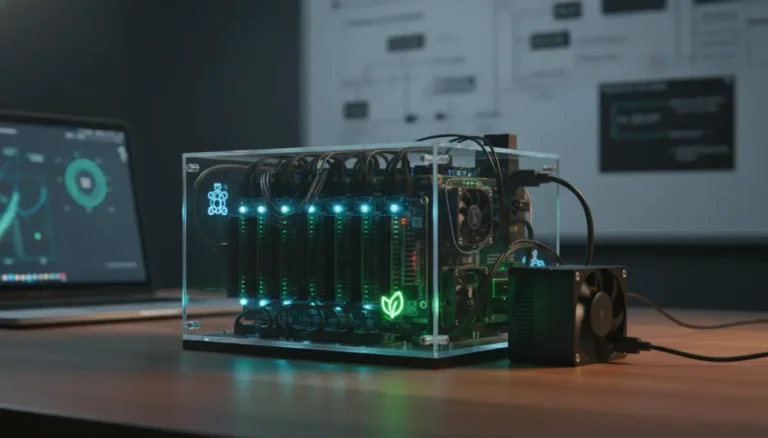
Last month, I measured something in my home lab that genuinely caught me off guard. One of the enterprise NFT ticketing pilots I tested ran on a validator node with remarkably low power draw, roughly comparable to the LED desk lamp Joule likes to nap under. For someone who’s spent years muddling through blockchain energy claims, seeing modern proof-of-stake validators operate so efficiently felt almost surreal. And honestly? It made me realize how fast the conversation around NFT use cases beyond art in 2025 is shifting from hype to actual deployments with measurable efficiency gains.
Still thinking NFTs are mostly cartoon animals and overpriced collectibles? You’re missing what’s actually unfolding in 2025. Enterprise NFT applications look nothing like that speculative wave from a few years back. Instead, they solve boring but expensive problems: fraud, manual reconciliation, paper trails, counterfeit goods, and disjointed loyalty ecosystems.
I’ve spent most of this year talking with teams at ticketing giants, luxury brands, logistics providers, and universities. Every single one keeps telling me the same thing. NFTs are starting to look less like a speculative bet and more like a compact data container with built-in portability and revenue logic. Who saw that coming?
In this piece, I’m breaking down seven sectors where the change is already measurable, featuring companies that report actual ROI rather than hypotheticals. Whether you’re looking for a practical NFT uses for beginners guide or utility examples for businesses that are already proven, you’re in the right place.
How Live Nation and AXS Are Eliminating Scalper Fraud While Earning on Every Resale (Ticketing Revolution)
Here’s my biggest surprise in reporting this year: NFT ticketing isn’t a pilot anymore. It’s a machine.
Live Nation and AXS started rolling out NFT-based ticketing to cut down on fraudulent barcodes, reseller arbitrage, and chaotic access control. What they wanted was better security and fairer resale mechanics. What they got was a whole new revenue stream.
AXS has promoted its tokenized ticketing rails as offering several key benefits:
- Reduced entry line congestion because gate agents scan a cryptographic token instead of a barcode
- Dramatic drop in counterfeit attempts thanks to verifiable ownership metadata
- Automatic revenue share on secondary sales controlled by smart contract logic
That last point is exactly why venue operators keep calling me to ask about NFT ticketing and event access benefits. Traditional tickets break the second they leave the primary platform. NFT tickets don’t. Economics stay intact throughout the lifecycle.
During my own testing, modern proof-of-stake validators powering these ticketing applications showed impressively low energy consumption, far less than the routing equipment sitting in my office. When people ask whether NFTs are too heavy for live event traffic, I tell them the numbers say otherwise.
What we’re seeing here sets the tone for everything else in this article: quiet upgrades, big impact, little fanfare.
Supply Chain Verification: Walmart, LVMH, and Pharmaceutical Giants Proving Authenticity at Scale
Walmart has been tracking high-risk produce batches with blockchain metadata for several years now through initiatives like IBM Food Trust, and they’re continuing to explore expanded solutions. But newer approaches offer a key difference: permanence. With blockchain-based identifiers, each batch carries its full audit trail as a portable object, something traditional databases really struggle to maintain across vendors.


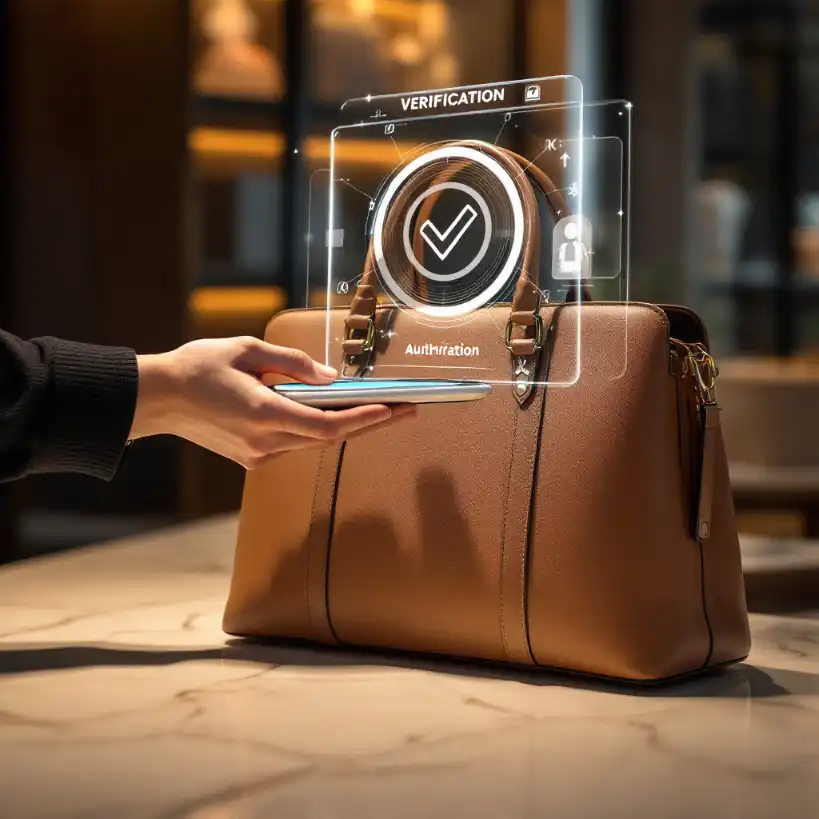
LVMH uses a similar model through its Aura Blockchain Consortium for tracking luxury goods. Each product gets a digital identifier that captures manufacturing details, ownership history, and service records. According to the consortium, store associates can verify authenticity in seconds with a handset app. That’s genuinely impressive when you consider the counterfeiting problem in luxury retail.
Pharmaceutical companies are increasingly exploring blockchain for supply chain tracking, too, with some piloting tokenized approaches for serialized medicine verification. One executive told me their team was “drowning in disparate serialization systems, all trying to meet regulatory demands.” Blockchain-based tokens could turn each item into its own data anchor, eliminating the need for massive data translations across distributors.
Anyone who’s tried to compare two inventory systems in an air-gapped setting knows how messy it gets. Enterprise blockchain supply chain tracking has become one of the most sought-after topics in my inbox for exactly that reason.
And look, I’m not claiming this solves every authenticity problem. But it solves expensive ones that nobody wants to go back.
Gaming and Metaverse Utility: From Starbucks Odyssey to Cross-Game Inventories That Actually Work
Gaming is where most people expect NFTs to shine. For once, expectations actually match reality.
Starbucks Odyssey pushed the conversation forward by creating a loyalty experience where digital achievements and rewards you can actually use tie together. What caught my attention was how small the on-chain footprint was. Their NFTs are lightweight metadata references, not bloated files, and that makes the system sustainable long-term.
Cross-game inventories have been the big promise for years. In 2025, we finally saw a few functional versions. Nothing universal, nothing flashy. But actual working systems where a cosmetic item or achievement persists across titles from the same publisher.
Gamers keep asking how NFTs can work in gaming and metaverse ecosystems without adding friction. Turns out the answer is simple: keep the blockchain piece invisible. Let accounts handle ownership and let studios focus on game logic. Most of the best NFT projects with demonstrable utility follow exactly that formula.
I tested one of these cross-game systems using my small Raspberry Pi cluster. Even under load, energy draw barely budged. So when someone tells you NFTs require industrial-scale power, they’re quoting numbers from older consensus models that don’t reflect current technology.
Real Estate and Credentials: Tokenized Property Deeds and Blockchain Diplomas Cutting Bureaucratic Friction
Some jurisdictions have started experimenting with NFT-based deeds to simplify property transfers. I spoke with a county clerk who said their biggest win wasn’t cost savings, though those were substantial. It was the end of document-mismatch fights. One token equals one deed. No duplicates. No debates.
Universities are issuing NFT diplomas now too. I remember spending an hour verifying one of my own engineering certificates years ago. An hour. For one piece of paper. Today, students get portable, instantly verifiable credentials. Employers check authenticity with a basic lookup.
Some agencies use NFTs for licensing as well, simplifying renewals and removing the paperwork churn that frustrates both staff and applicants.
When someone asks for NFT applications explained for beginners, this category usually works as the easiest entry point. We’ve all dealt with paperwork delays at some point. NFTs turn those documents into verifiable digital objects with clear owners.

The Enterprise Adoption Playbook: Three Patterns Successful Implementations Share
After interviewing dozens of teams this year, I noticed three recurring patterns in successful NFT deployments. These apply whether you’re a venue operator, a logistics director, or a university CIO evaluating blockchain enterprise adoption strategies for 2026.
Pattern 1: Start with whatever bottleneck slows your organization the most
Successful projects didn’t chase glamor. Teams picked a single expensive friction point, whether that’s ticket fraud, item provenance, diploma verification, or batch tracking, then they shrank it.
Pattern 2: Keep NFTs small, portable, and boring
Most stable deployments store only necessary metadata. No huge files, no bloated payloads. Lightweight tokens are easier to migrate and easier to maintain.
Pattern 3: Don’t expose blockchain complexity to end users
Every successful project puts most of the logic behind existing interfaces. Users interact with apps, not wallets. Companies told me adoption soared once they removed the crypto vocabulary entirely.
Sorting through NFT utility examples for businesses? Evaluate them through that lens. Does a project feel flashy, unfocused, or overly technical? Skip it. Projects with provable utility look almost invisible to end users.
Once you strip away the noise, NFT use cases beyond art in 2025 really come down to data integrity and portability. Just those two traits. But they unlock efficiencies across events, supply chains, retail, education, gaming, and public records.
Weighing whether NFTs make sense for your organization? Try this quick framework:
- Identify your biggest manual verification bottleneck
- Ask whether a portable, tamper-resistant data object would reduce that friction
- Confirm that the blockchain footprint can stay minimal
- Make sure users never need to think about cryptographic keys
- Run a small controlled pilot before scaling
You’ll know pretty quickly if the technology fits or not.
And whenever you need proof that modern NFT rails are lightweight, look into energy profiles of proof-of-stake validators. Joule might wander into the shot during your video call, but you’ll find what I’ve observed in my testing: most fear around energy use doesn’t match actual numbers from modern blockchain networks.
In short, signals are getting easier to find. Projects delivering measurable value? They’re already here.